There came a time in the life of the leaf spring when car
drivers decided they wanted to turn the front wheels and
change directions. Immediately following that disastrous
first turn, engineers began the quest for alternative
suspensions. Many number 2 pencils later, two new
choices arose: Coil springs and torsion springs. Both of
these would improve the ride quality and more
importantly make the cars easier to handle in turns.
Coil Springs, are more popular, and are used on nearly
all modern cars, and many trucks. The coil spring is
exactly as the name implies a thick round bar of steel
wound into a coil. Imagine a slinky, but a very rigid
one. When a car drives over a bump the coil spring
shortens by bringing its coils closer together. When it
passes the coil extends or rebounds. A key benefit of
coil springs is that their properties are easily changed
based on thickness of the bar, number of coils and
closeness of the coils to each other and the type of steel
used. This made adjusting the suspension to make the
ride quality "just right" very easy.
As we have suggested before- leaf springs can be
adjusted also- but they are very limited in adjustment.
Leaf springs also take up a lot of real estate in the
bottom of the car. Coil springs can fit in a small area (as
small as the space taken up by a 1 liter soda bottle).
This freed engineers to place the springs where they
would work the best, not just the only place they would
fit. Specifically, out in the corners of the car, rather than
next to the frame. The wider apart the cars wheels and
suspension are, the more stable it is when turning. Also
coil springs allow for greater range of motion of the
wheel as it travels over rough roads. Coil spring's
flexibility allow cars wheels to stay in contact with very
rough roads, despite being at odd angles. Coil springs
also permit a car's wheels to 'lean' into a turn, improving
handling. Leaf springs are rigid and only permit
movement up and down.
drivers decided they wanted to turn the front wheels and
change directions. Immediately following that disastrous
first turn, engineers began the quest for alternative
suspensions. Many number 2 pencils later, two new
choices arose: Coil springs and torsion springs. Both of
these would improve the ride quality and more
importantly make the cars easier to handle in turns.
Coil Springs, are more popular, and are used on nearly
all modern cars, and many trucks. The coil spring is
exactly as the name implies a thick round bar of steel
wound into a coil. Imagine a slinky, but a very rigid
one. When a car drives over a bump the coil spring
shortens by bringing its coils closer together. When it
passes the coil extends or rebounds. A key benefit of
coil springs is that their properties are easily changed
based on thickness of the bar, number of coils and
closeness of the coils to each other and the type of steel
used. This made adjusting the suspension to make the
ride quality "just right" very easy.
As we have suggested before- leaf springs can be
adjusted also- but they are very limited in adjustment.
Leaf springs also take up a lot of real estate in the
bottom of the car. Coil springs can fit in a small area (as
small as the space taken up by a 1 liter soda bottle).
This freed engineers to place the springs where they
would work the best, not just the only place they would
fit. Specifically, out in the corners of the car, rather than
next to the frame. The wider apart the cars wheels and
suspension are, the more stable it is when turning. Also
coil springs allow for greater range of motion of the
wheel as it travels over rough roads. Coil spring's
flexibility allow cars wheels to stay in contact with very
rough roads, despite being at odd angles. Coil springs
also permit a car's wheels to 'lean' into a turn, improving
handling. Leaf springs are rigid and only permit
movement up and down.
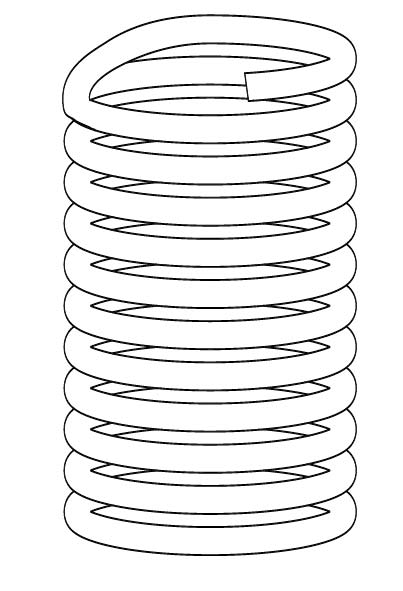
Coil Spring


Suspension Designs
